Step Plates and Drainage
With the new track laid, there is still plenty of work to do. Ballasting will take place in the first week of December. The old track panels are being transported back to Horsted Keynes yard four at a time and there is still a lot of clearing up to do. Wednesday 26th was mainly concerned with drainage. But before we started on that, there was a remaining task on the track. Joining old track to new has a problem that there ar differing amounts of wear on the rails. The solution to this is step fishplates. It is hard to guess which size of step you will need in advance and so this is a retrofit. Here, we are using a transition bullhead panel which has a step to the old rail.
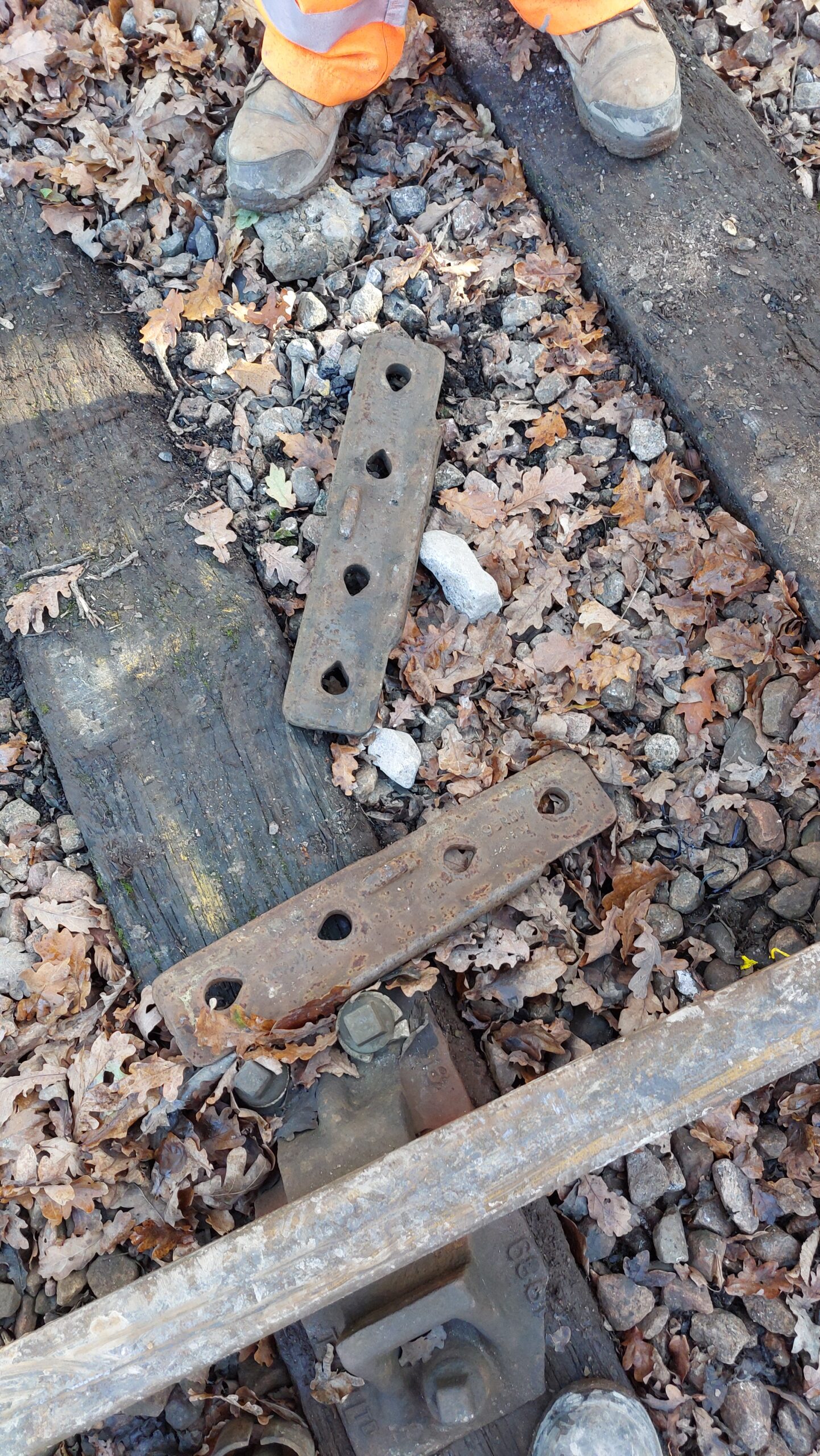
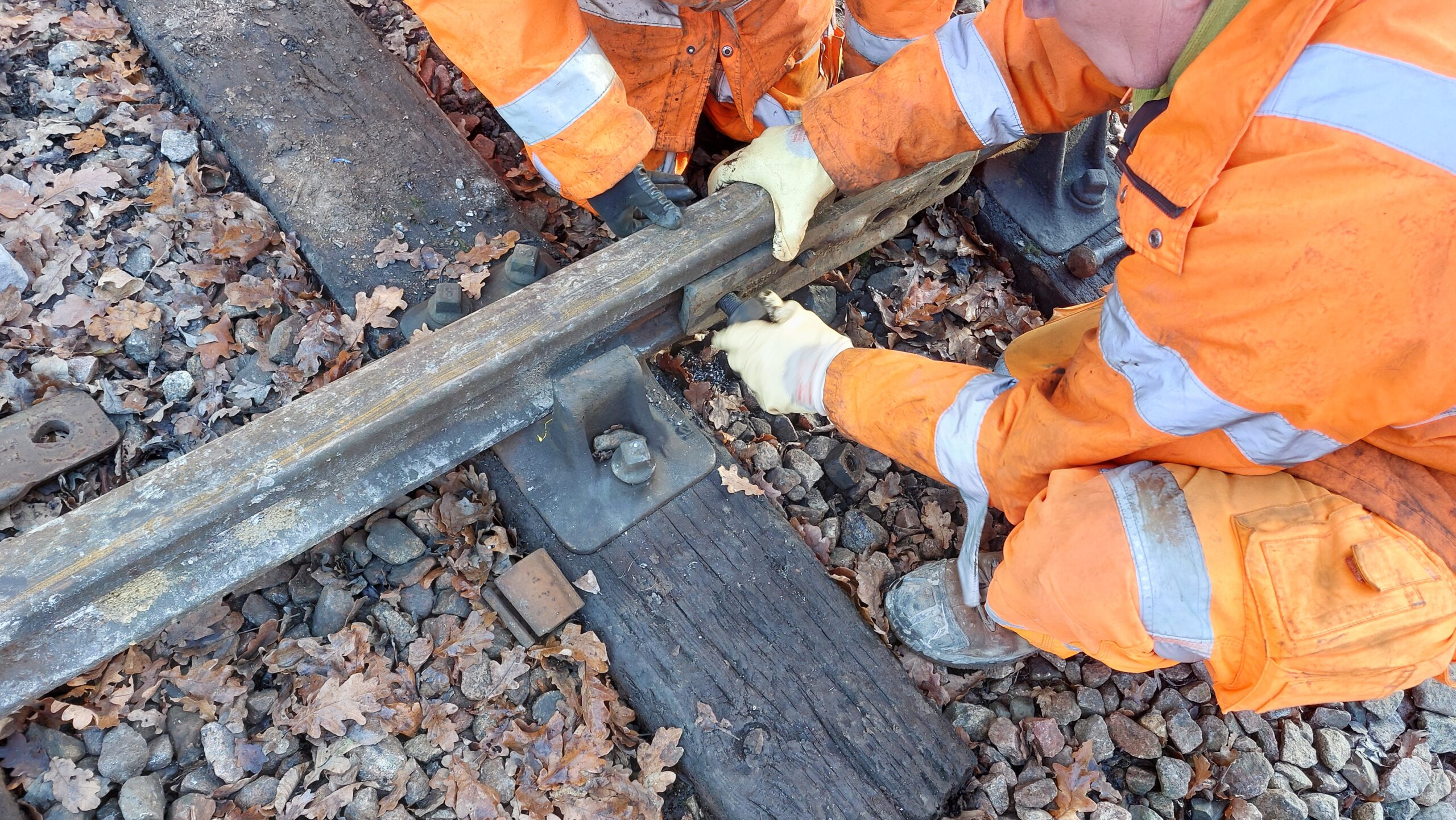
Left image: Bullhead step plates. Right image: Step plate being fitted.
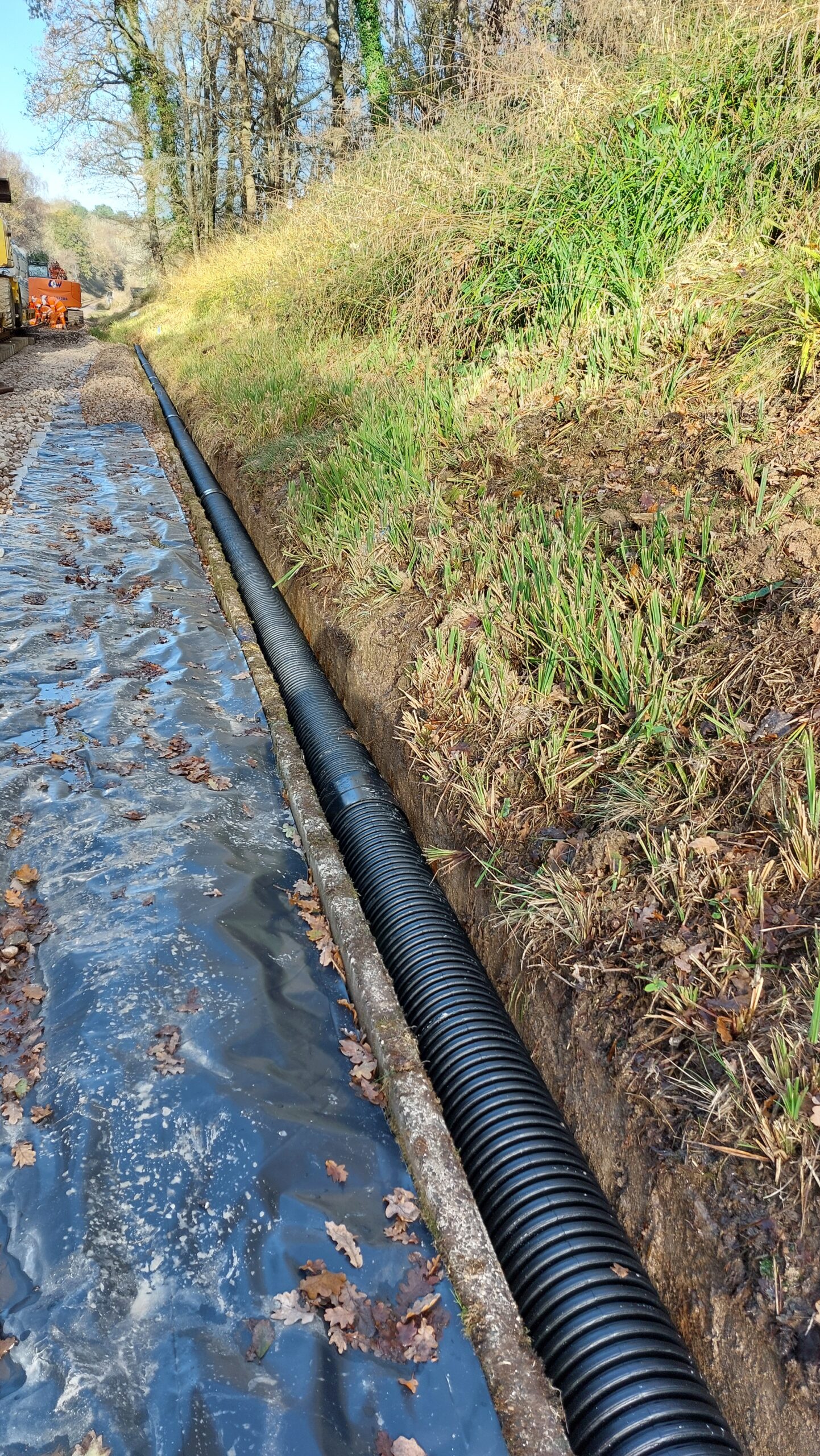
The drainage for the cutting is provided by a concrete trough which has holes in the side to allow water to enter the trough. This trough was originally laid (presumably) by Southern Railway and originally had covers, 90% of which are not now present. This has two main problems: firstly, vegetation falls down the cutting and grows in the trough, blocking it and secondly, the cutting side is unstable on that side (the east side) and and further slips are likely to cover the trough. The trough flows liberally with water at all times of year and a blockage would soon cause severe operational difficulties. The sloping terram (fibreglass), plastic, terram sandwich under the new track will increase drainage towards the trough. It was decided that a better solution was needed to ensure the formation could better continue with reduced maintenance. The chosen solution was to put a porous plastic pipe in the trough and cover it firstly with shingle and then with track ballast (termed a French drain).
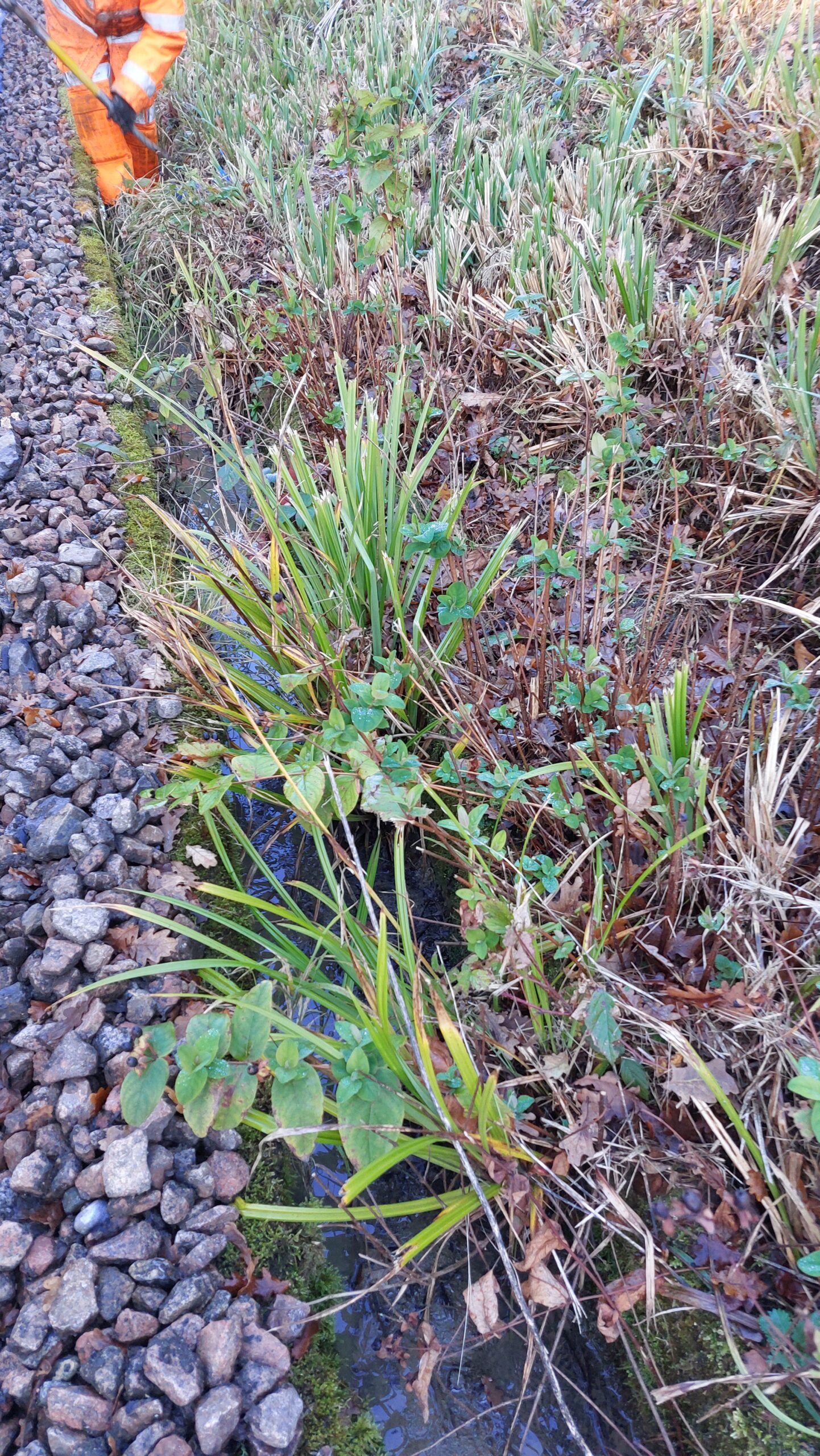
Left image: vegetation growing in the trough prior to clearing
Right image: Porous pile laid in the trough
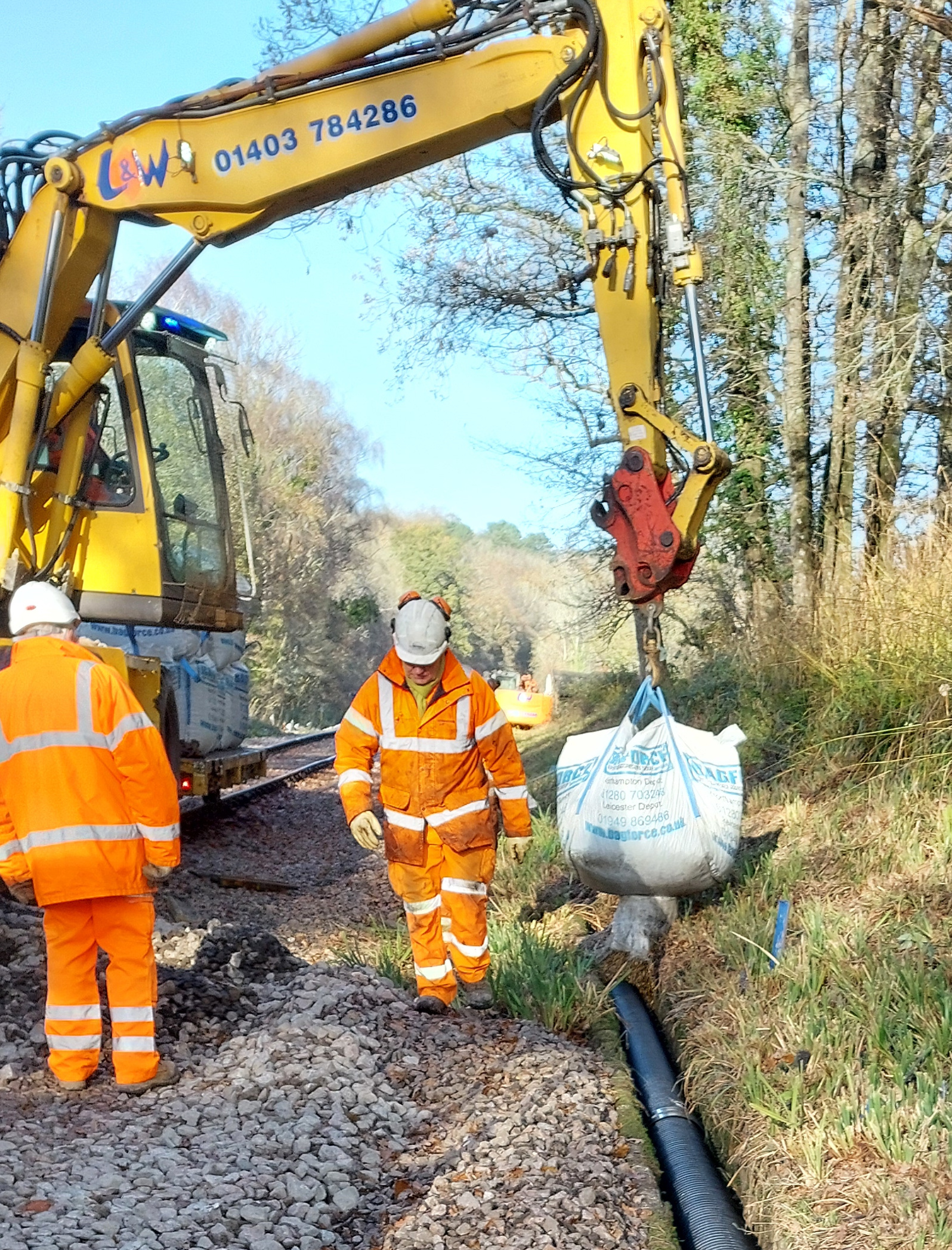
Left image: The shingle is being spread from a bulk bag
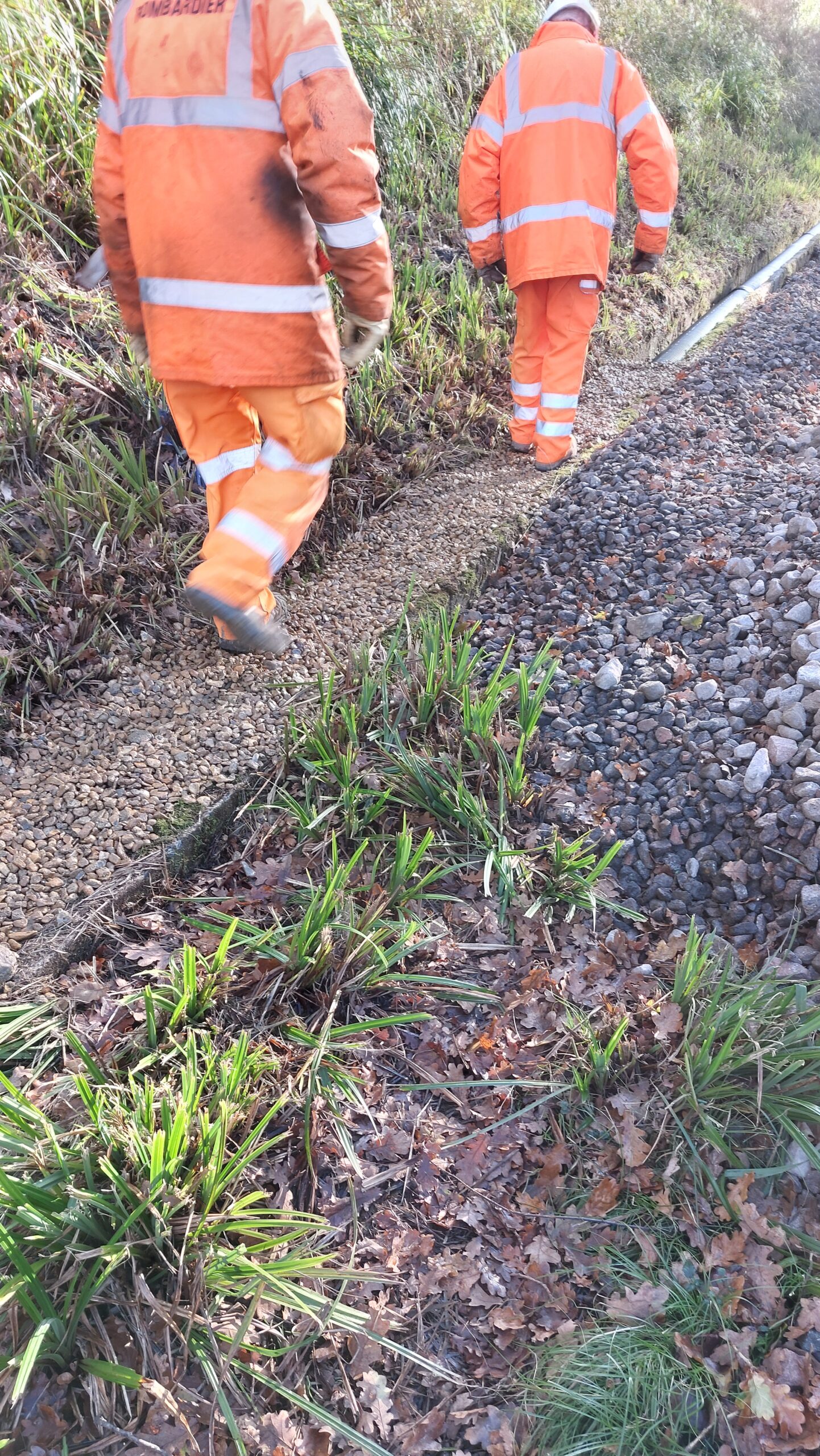
Right image: Levelling out the shingle. A track ballast top dressing will be added later
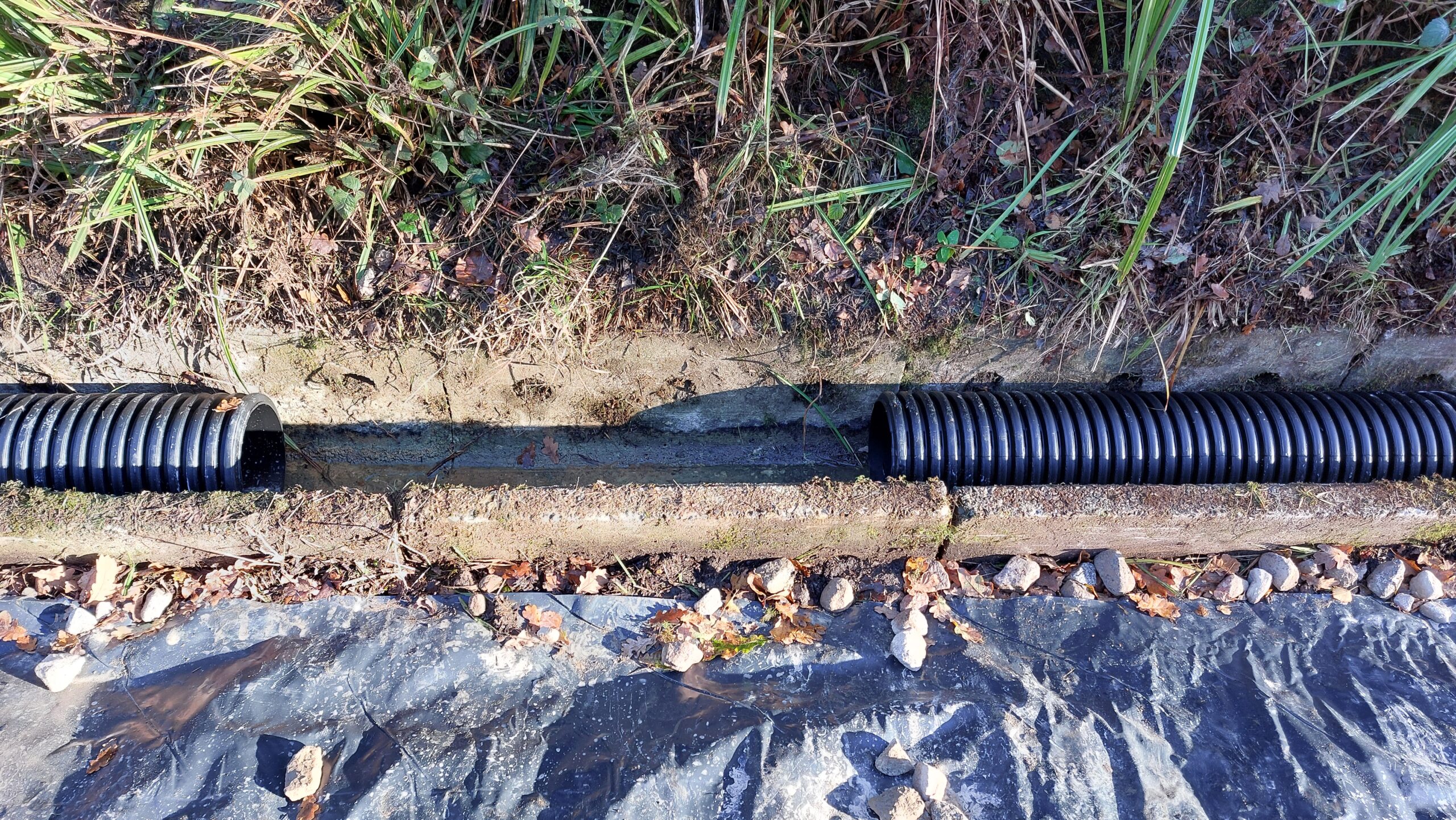
Gaps in the plastic pipe are made to allow for rodding points. These will use some remaining concrete covers to protest the drain.
All images: Bruce Healey